An RFID reader online is a network-connected device that can identify and gather information from RFID tags. They send radio waves to activate tagged items and transmit the data to the reader.
Retailers use RFID to reduce out-of-stock situations and provide real-time inventory data. For example, clothing wholesaler Advanced Apparel uses RFID to pinpoint warehouse merchandise down to the shelf or rack level.
Choosing a Reader
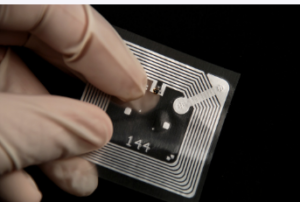 There are a few key factors to consider when choosing an RFID reader. These include the environment, how far tags will be from the reader, and what type of RFID tag you need to read. The most common type of RFID reader is the fixed interrogator. These are usually mounted to a wall or in a stand. They can also be mobile, so workers can carry them to scan items at a distance.
There are also several ways to connect the reader to your computer system. The most common is via a serial port such as RS232 or TTL. Other options are USB or Bluetooth. Choosing the correct interface is essential as it will determine how easily integrating the reader into your system is.
The other important factor to consider is the maximum reading distance of the reader. It is determined by the transmitted power of the reader, which is regulated depending on country regulations. Other factors, such as the antenna and cable loss, can also affect the read distance.
When selecting a reader, it is also worth considering what level of security you require. For example, if you must protect the data stored on the chip against tampering or unauthorized use, you will need a secure reader. Several solutions are available, including locks that prevent unauthorized use by blocking the signal from the RFID reader online to the chip.
A final point to consider is whether you need a reader with a proprietary air interface or one compatible with a standard such as Wiegand. A reader with a proprietary air interface will only work with the tags produced by that same vendor. It can simplify ordering and maintenance since you only have to deal with a single manufacturer.
Choosing an Antenna
The antenna is the key to a good RFID reader. It can make or break how much you get out of your system. The three main factors that set passive UHF RFID antennas apart are frequency range, gain/beamwidth and polarization.
Choosing the correct antenna for your RFID application depends on the environment and the tags you will use. For example, if you need to read labels from long distances, a wide-beamwidth and high-gain antenna might be required to create the best reading zone. On the other hand, if you need to read tags close to each other, you might want to choose an antenna with a narrower beam width and lower gain.
In addition, polarization matters because it determines how the signals are sent by the RFID tag and received by the RFID reader. For example, if you have an LHCP RFID tag and an RHCP RFID reader, the signals will bounce off each other and cause null zones where no motion can be detected. It will reduce the effective reading range of your system.
Passive RFID tags use a microchip that holds the information for an item, product or person and an antenna to send out radio waves to be read by an RFID reader that converts the electromagnetic signal into usable data. RFID readers can be mobile, so they can move around the store or warehouse or be mounted on a wall or overhead to maximize coverage area.
When the RFID reader emits a signal, it will activate a small amount of energy in the RFID tag’s antenna that makes the microchip “wake up” and send back its information to be recorded by the RFID reader. Once the RFID reader detects the tag’s signal, it will display that data on its screen or store it in memory for later use.
Most RFID reader online systems operate at a low power level, so they are safe to be near patients with electronic medical devices (such as pacemakers). The FDA has not found any evidence of adverse events related to using RFID near medical devices. However, there are concerns that electromagnetic interference (EMI) from RFID may negatively affect the performance of these devices.